ISSUES OF SMALL FISHING COMMUNITIES
This is the improved topic which I am researching about the smaller fishing villages in parts of Malaysia and even in my home country. These issues are more towards the smaller community lifestyles.
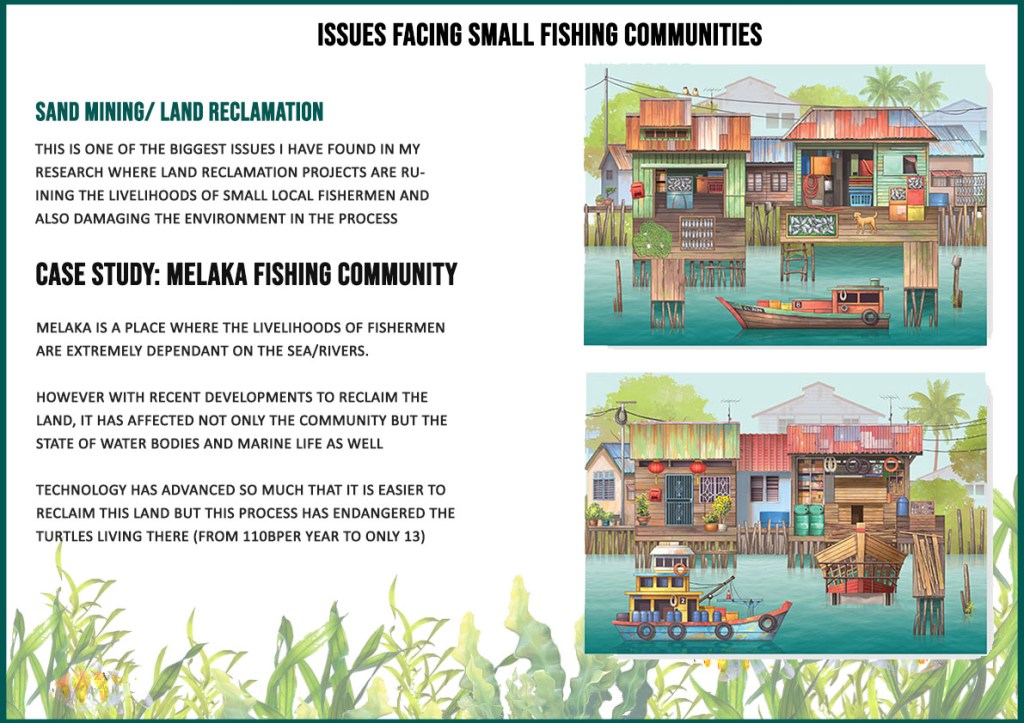
SAND MINING/LAND RECLAMATION PROJECTS
This was one of the biggest issues that has been taking place for a while. The spraying of sand with advanced technology and land reclamation projects have greatly affected the lives of fishermen and the livelihood of the community as well. Melaka for example has had terrible experiences such as drenching of boats, changes in the soil and water which affects both marine creatures and agriculture. Moreover, it has caused a lot of coastal erosion as well as decreasing number of fish due to the changes in river and seabed chemical content.
My idea at the moment is to attack the issue in a way that the design helps to decrease this effect or to prevent these situations with attention to the surrounding context. Or perhaps I could approach a more post apocalyptic method in which I use the eroded area but also try to solve the issue.
OVERFISHING/WEATHER ISSUES
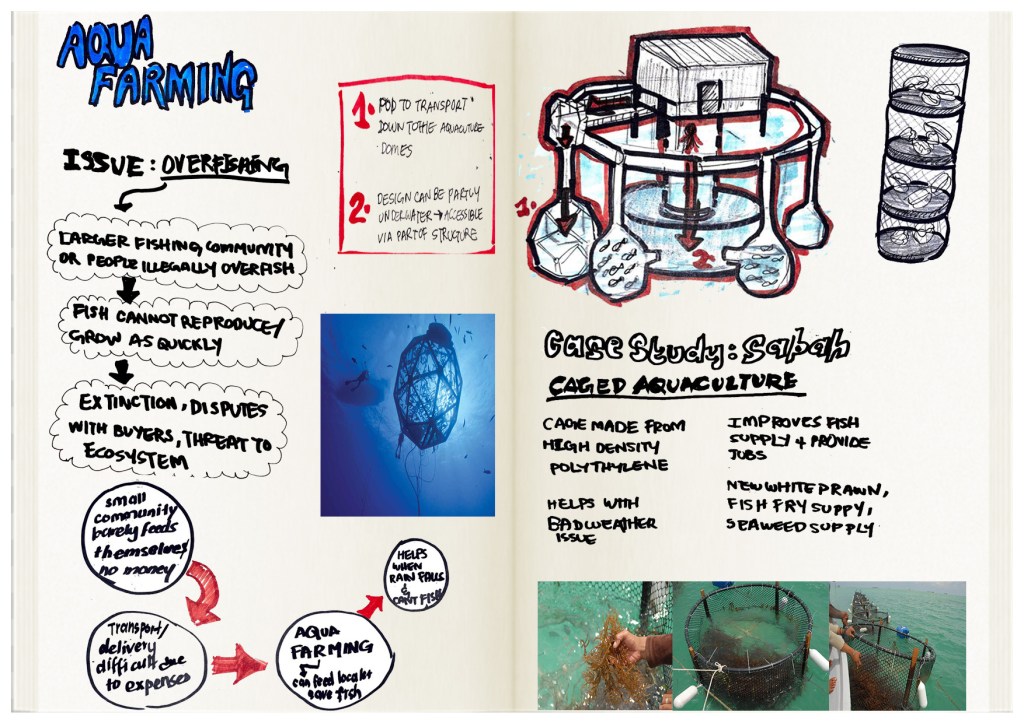
The first issue I have selected for the problems that smaller communities face are due to overfishing. Fish are caught by larger vehicles with no regard to the effects of the livelihood of smaller fishing villages. While they extort these fish, the locals are left with barely any catches to feed their families and now less younger children aim to be fishermen due to this issue as well.
To help with the issue of lack of fish availability or weather, my proposal is to incorporate aquafarming as a part of the design structure. With the fishing villages above the sea level, this could even use the surrounding environment efficiently to do so. The pods or cages for aquafarming can be underwater with a path to access it.
Aquafarming basically helps to breed the species needed to be sold or even endangered species in order to restore the ecosystem. A case study I researched for this in Sabah includes cages to keep seaweed and crustaceans in to grow them in this way.
POLLUTION
PACKAGING
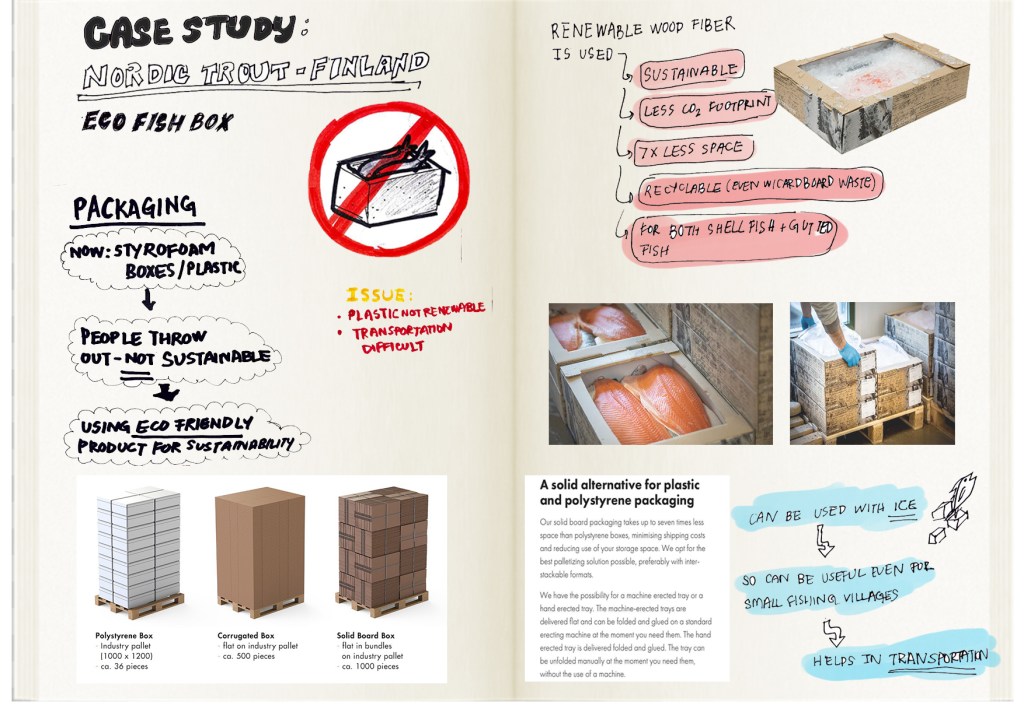
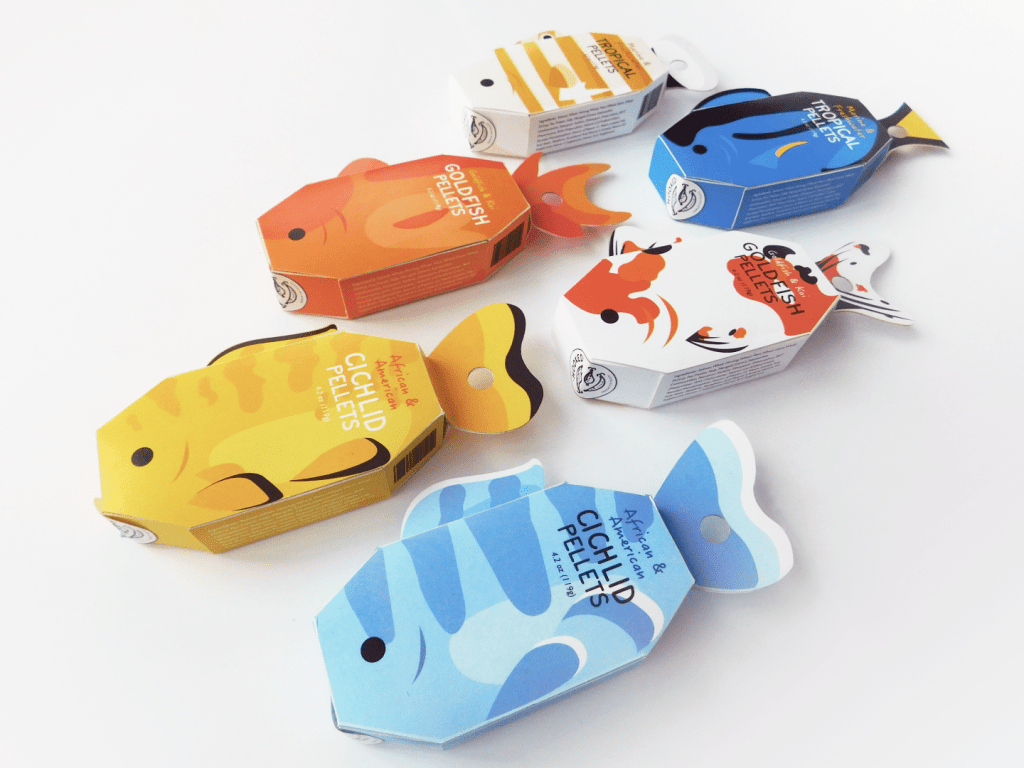
Another factor I had thought about was the packaging. The Styrofoam boxes used in transportation is not sustainable and takes way too much space. So to counter that, I have researched a case study in Finland that uses wood fibers instead. The best part is it is both applicable for shellfish and fish and can be kept in ice.

 ARC 60708 ADVANCED INTERIOR ARCHITECTURE DESIGN I