MEDIUM
1-WATERWHEEL MACHINE
This week I started to do more research on the medium to be included in the interior. My idea was to include the water filter or debris removing system in the form of a medium. For this I have sketched some drawings and did some research for some moving filters in the ocean.
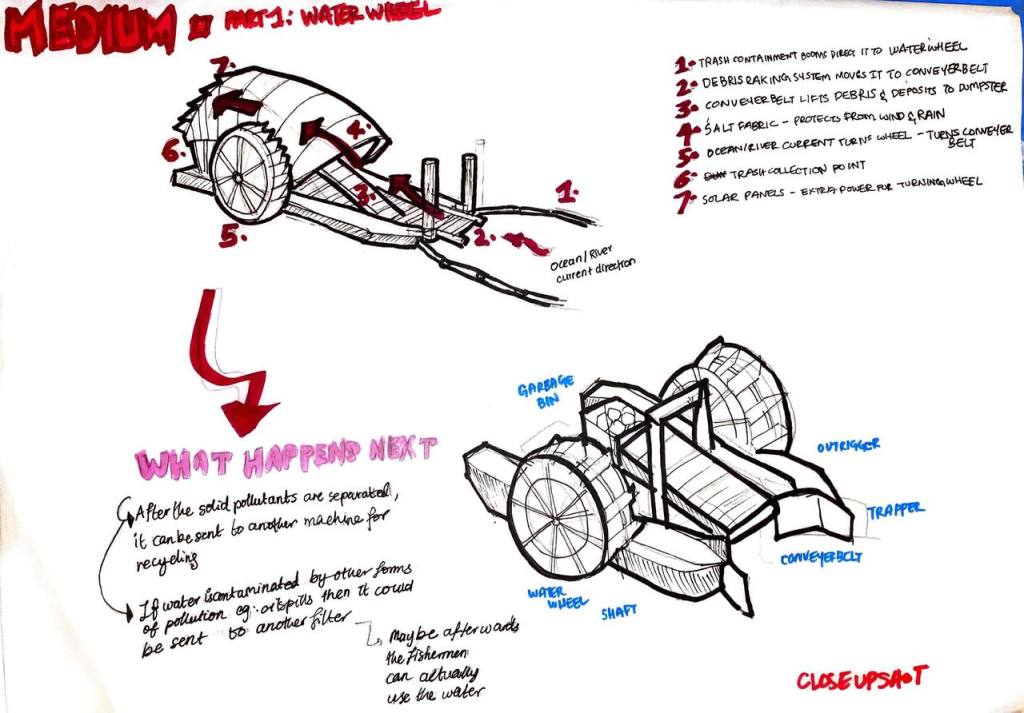
This filter system I have researched is called the water wheel which is a filtration system that follows the water current of the ocean or rivers and is powered by the current itself. Extra energy is obtained from the solar panels.
The debris or trash flows through the water to the conveyer belt and and then into a trash collecting box. The wheel is powered by the ocean current and solar energy. However I want to add to this and include areas for separation of trash materials to recycle into better parts. This is moatly for the debris that is floating or closer to the sea level.
2-PLASTIC FILTER DIAGRAM-HOW IT WORKS
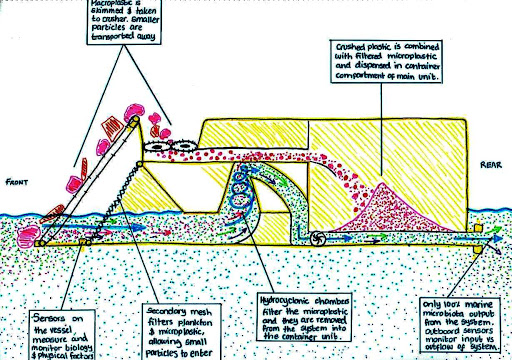
This picture also shows the filtration process of microplastics in the ocean using mesh systems and hydro cyclonic chambers. The filtered water from microplastics is then released back into the sea so it acts as a filter that is part of the ocean.
3- ROBOTIC VACUUM
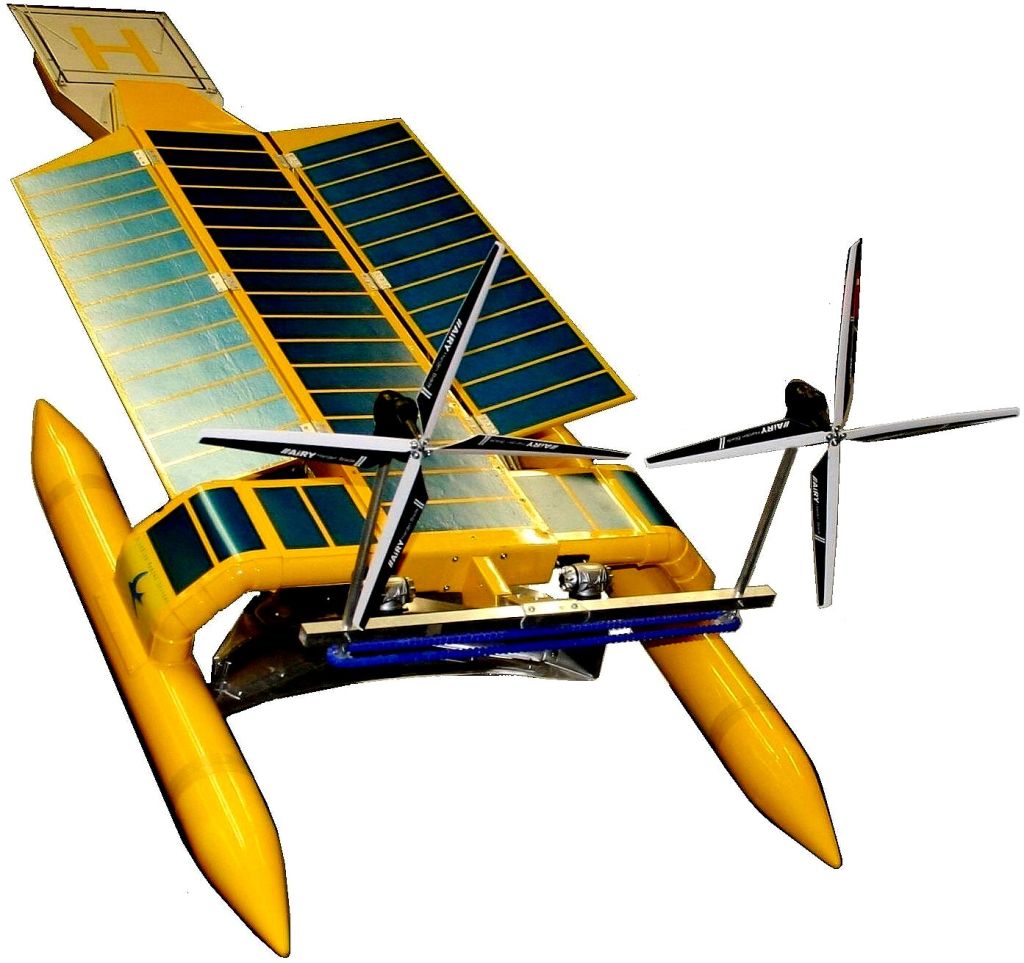
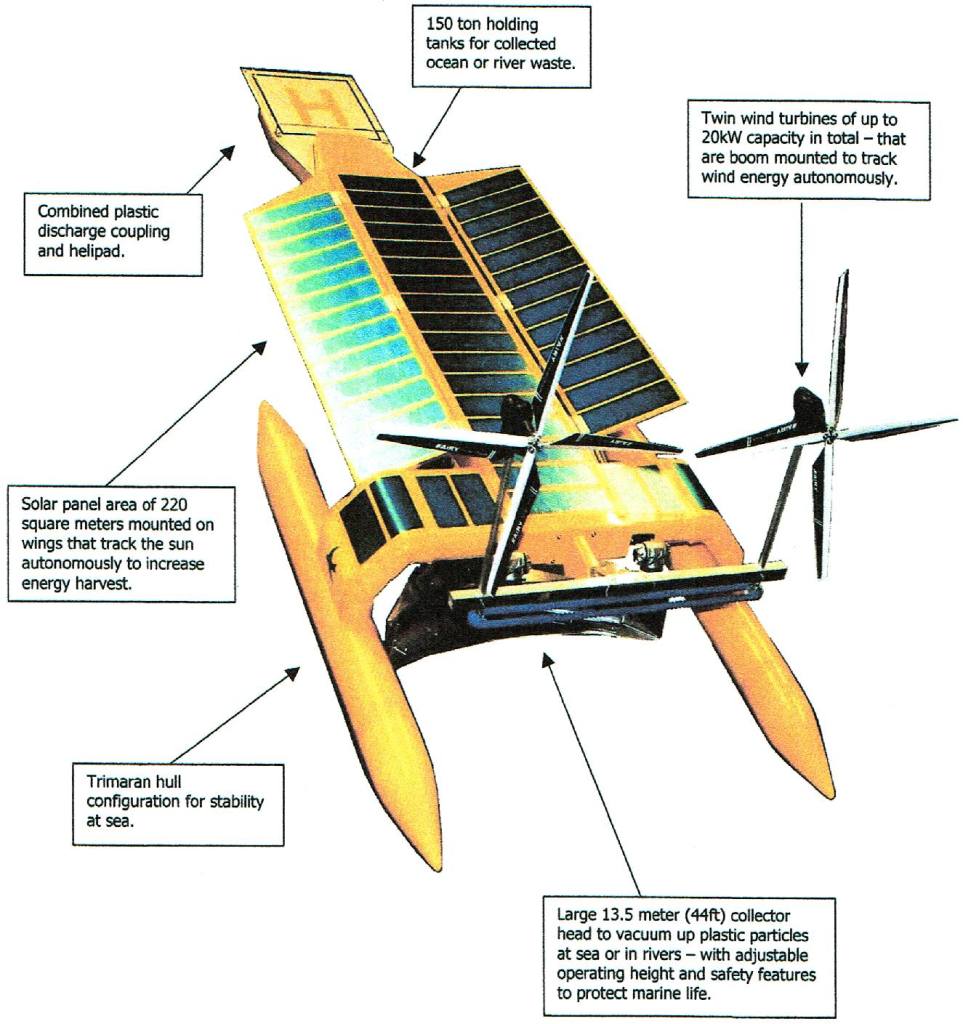
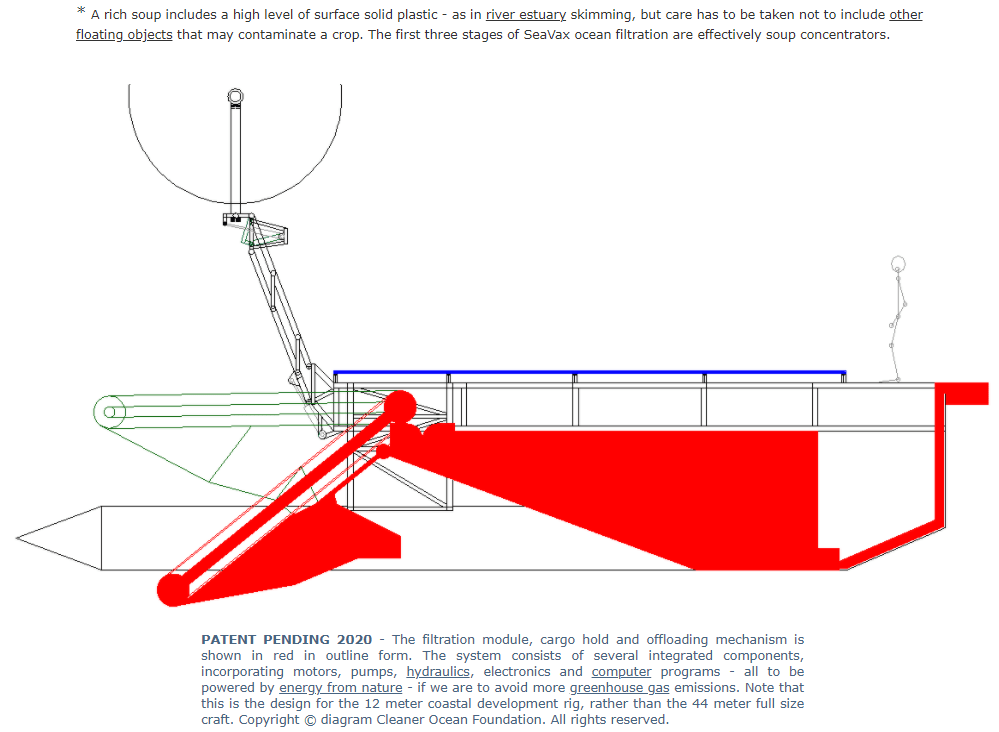
Finding plastic is much the same as going fishing, you need to know where to let go the nets to catch the fish – or don’t bother casting off. Charles Moore, oceanographer, returned from a five-week exercise in the Pacific Ocean with water samples showing 48 parts plastic for every part of plankton. This filter is more towards the deeper part of the oceans.
Barely 1% of marine plastics are found floating at or near the ocean surface, with an average global concentration of less than 1kg/km2. This concentration increases at mid-ocean locations We can (and should) clean from these centers outward, but would do more good concentrating on incoming, where over 80% of the annual input comes from land (everyday items such as drinks bottles and other plastic packaging), and the remainder comes from plastics released at sea, the majority as a result of fishing activities – due to lost and discarded fishing gear.
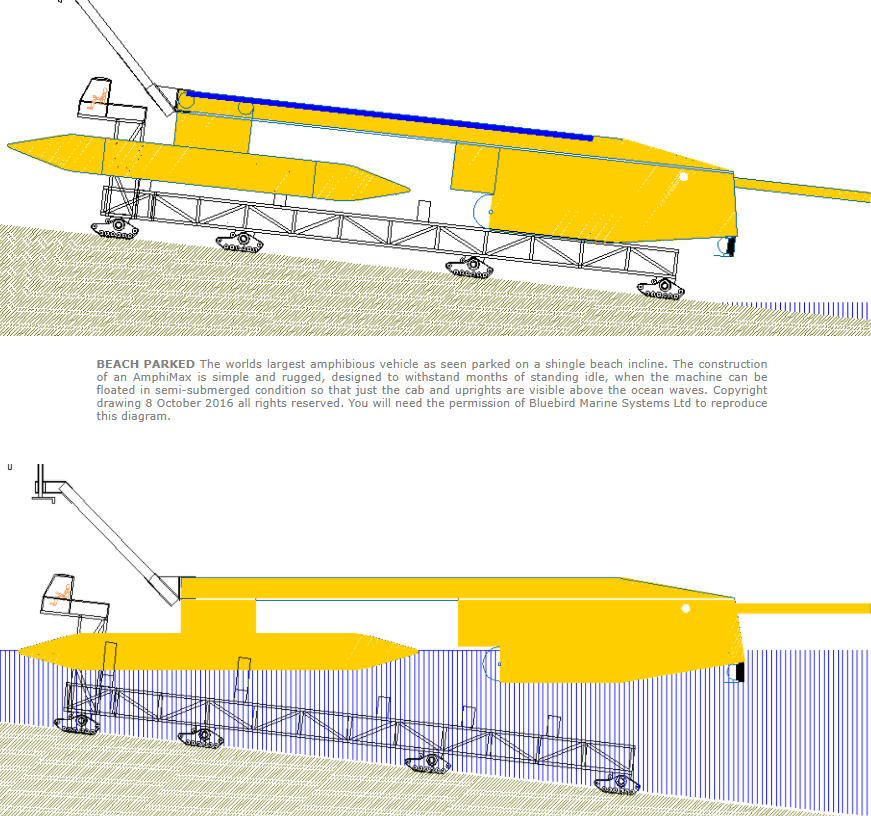
This image shows how this filter is working as a floatation device. The wind turbine structure and solar panels provide energy so that it functions efficiently.
STUDIES
1-HOUSE FOR AN ART LOVER
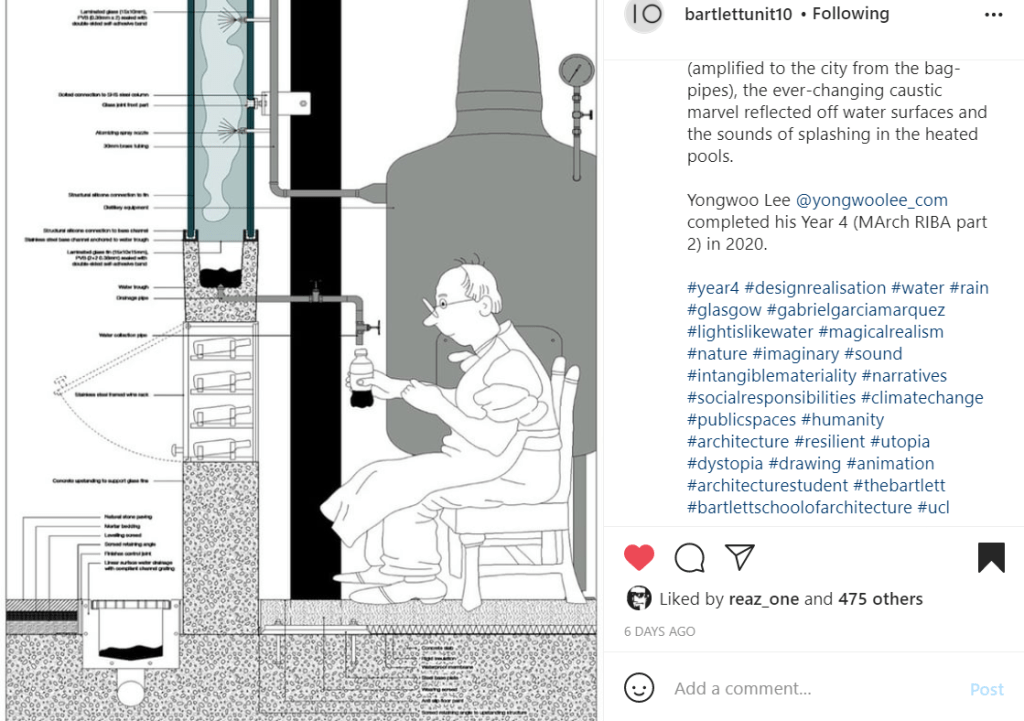
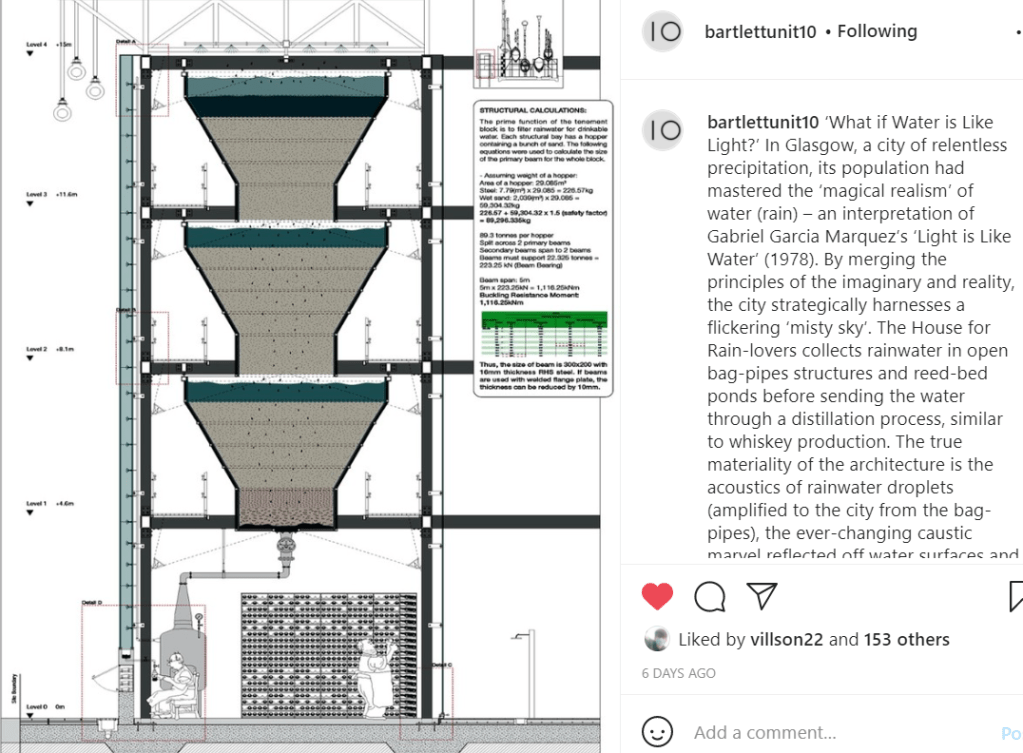
This is a project where the medium is a filter system in an area that mimics the interior as a place with rainfall to bring a mystical feel to it. The house collects open rainwater in open rain pipe structures which sends it through a distillation process and can be used by the user.
This is quite interesting as the display is shown a big part of the system in this project which is what I would like to do.
2-TELOK GONG FISH MARKET AND FISHERY TOURISM HUB
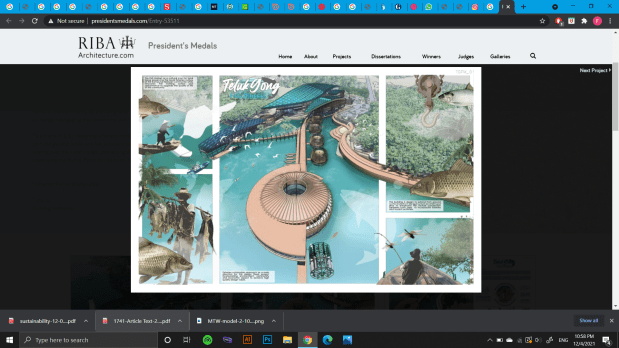
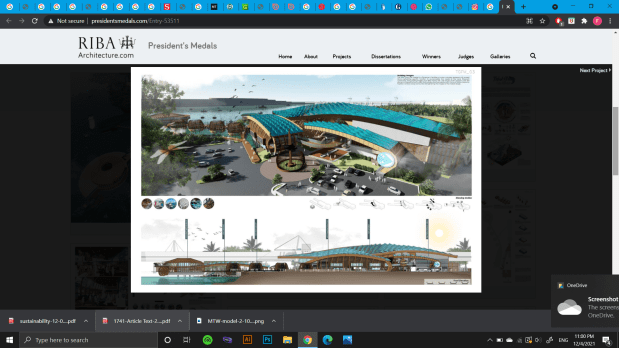
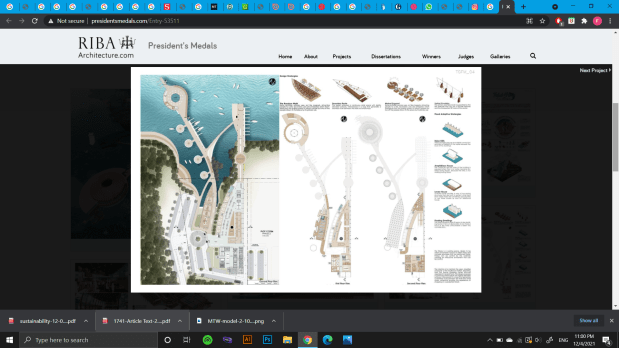
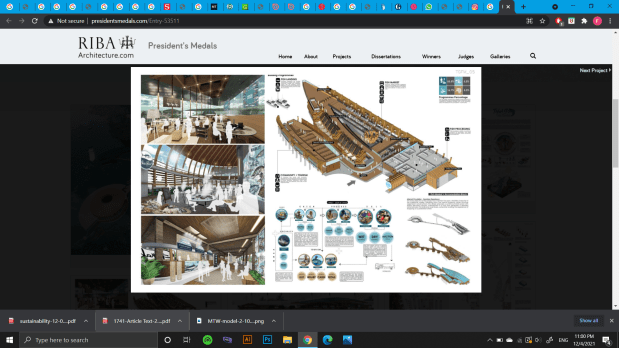
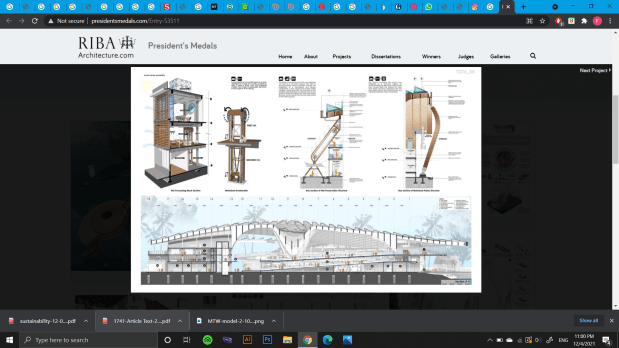
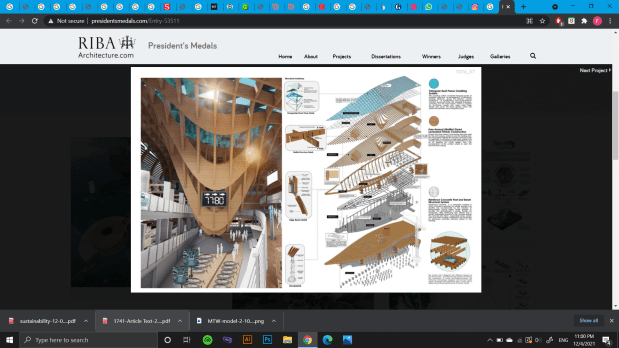
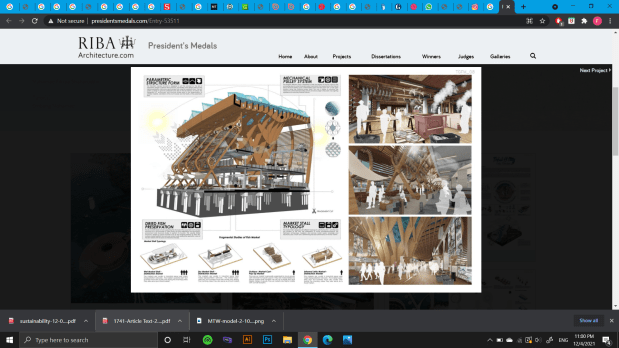
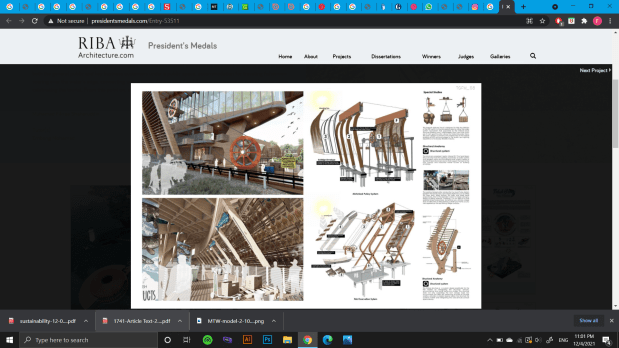
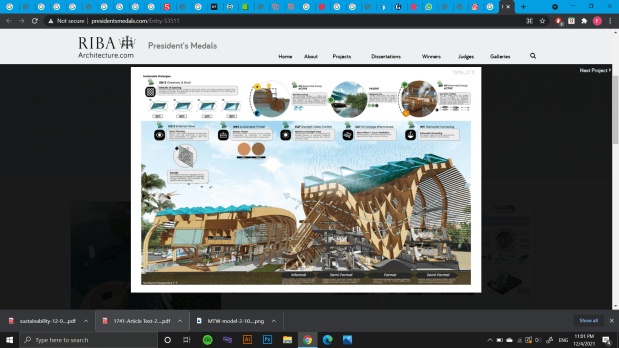
This project is an examination of the opportunity to revitalize the old, small scale fisheries industrial community of Teluk Gong, Port Klang that breaks the current detrimental cycle of exportation. The aim of the project was to revitalize the community by providing local fishermen with the facilities to catch, process, and trade their goods, in exchange, reengaging the community with their local traditional fishery.
To achieve this, by designing a fishery complex, with the fish market and eateries as a central anchor point presented both the general public and key business customers under a public space, accommodation for traveling fishermen soaring over the water’s edge, connecting with a public fishing wharf and floating restaurant as part of center piece celebrating the tourist. From this point on, one can encounter being intertwined as part of the traditional process.
I think that this project shows a lot of interesting ways in which the fishing issues are addressed. The use of pulley system like a medium in the firm of design and also functional for drying fish was quite unique so I want to represent this type of medium relating to the issues
3- A GRAIN OF SAND- BUILDING THE PEARL OF CAPITAL SRILANKA
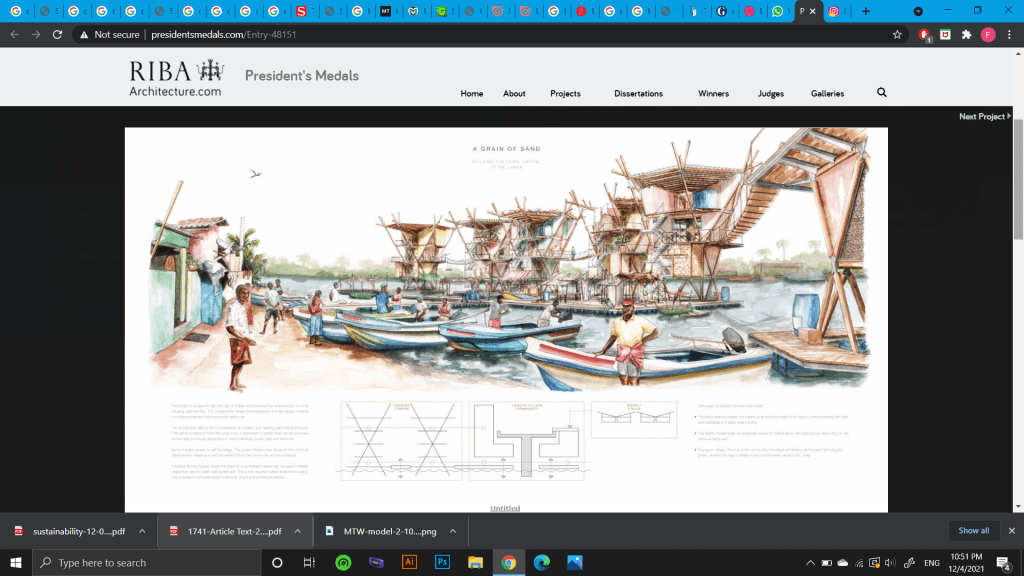
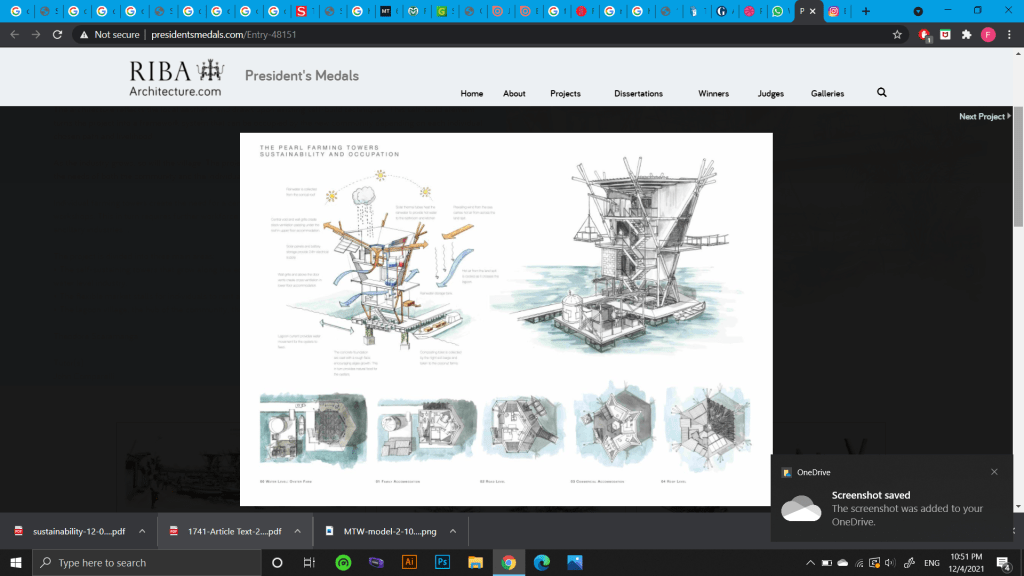
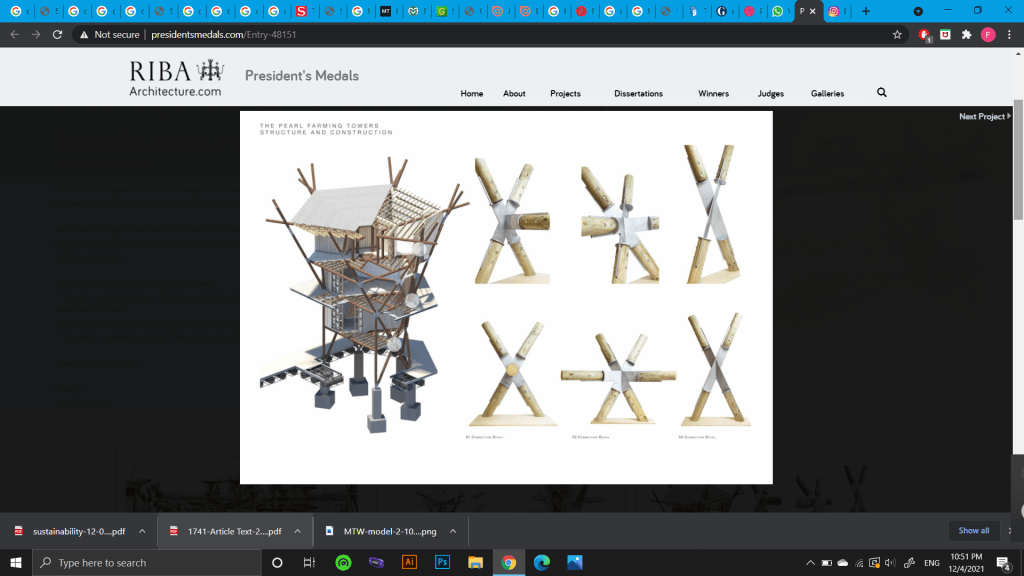
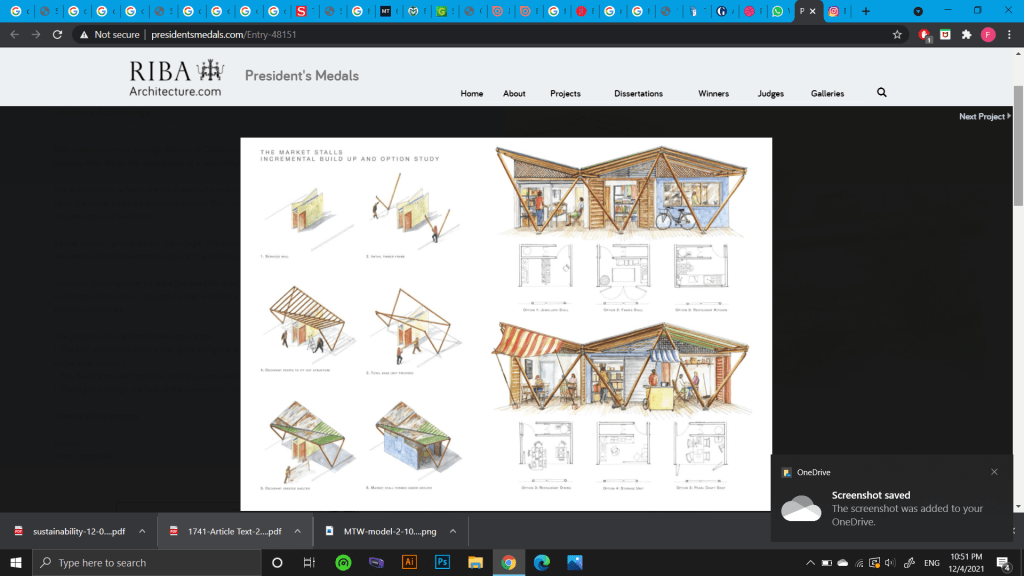
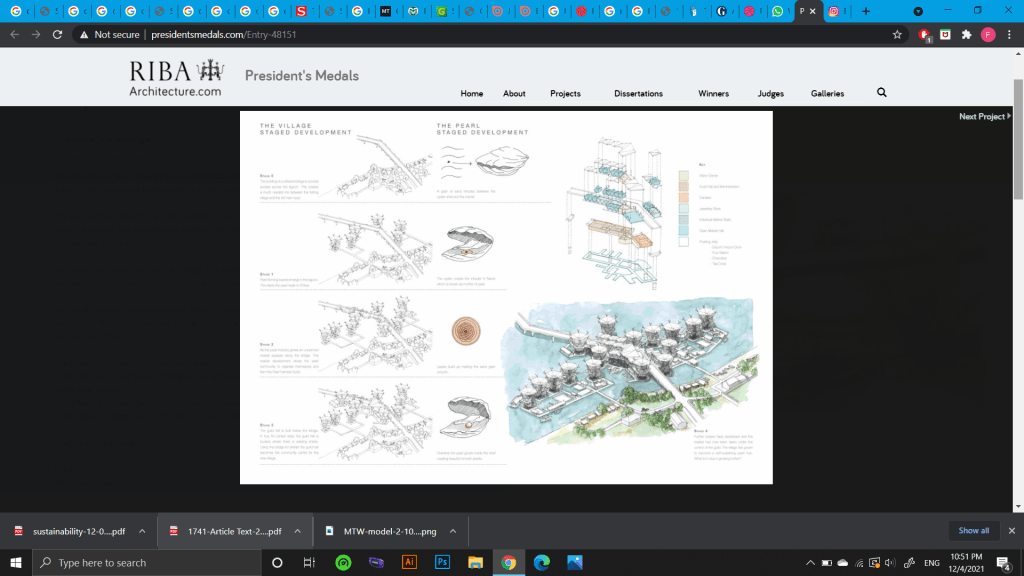
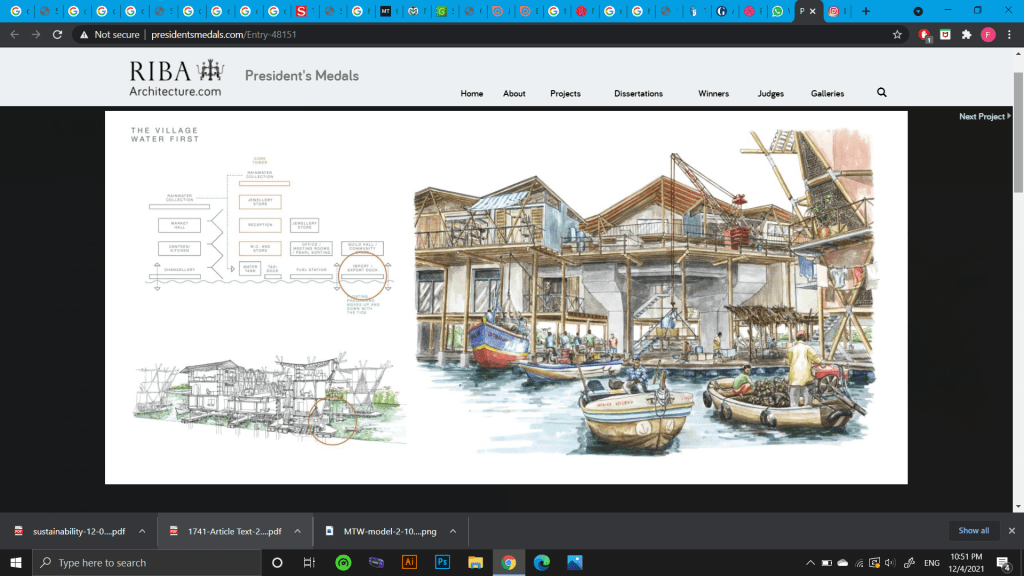
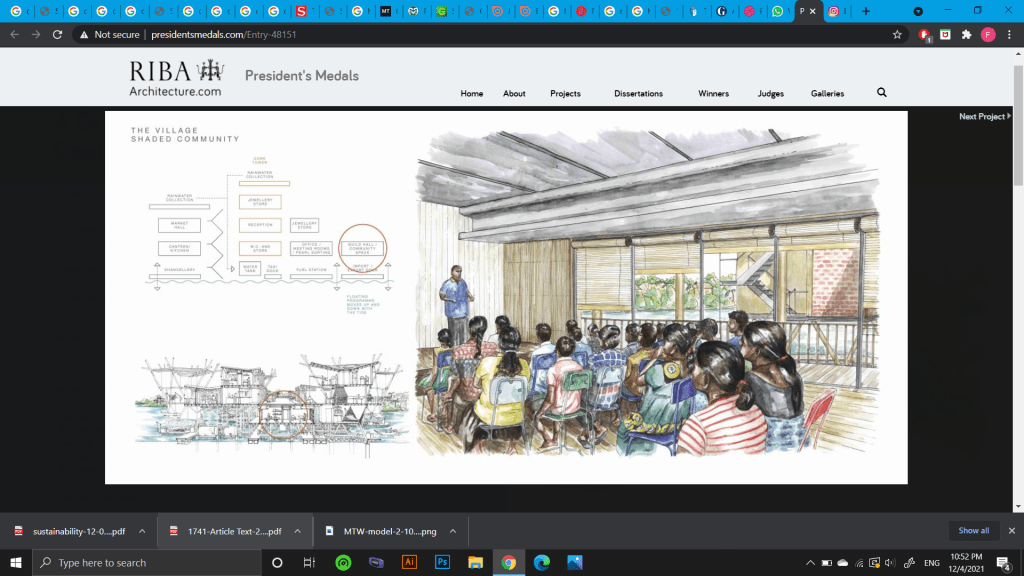
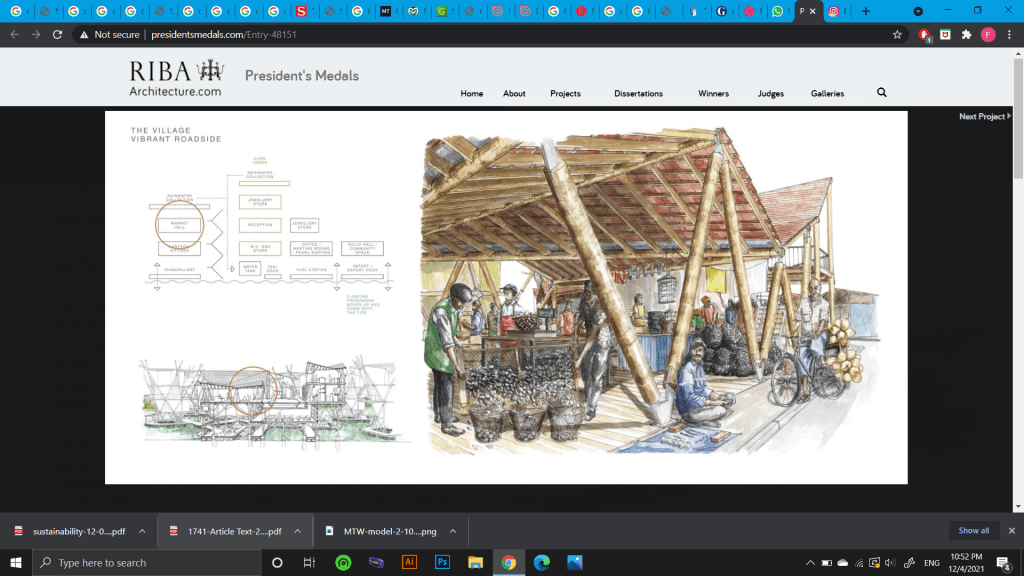
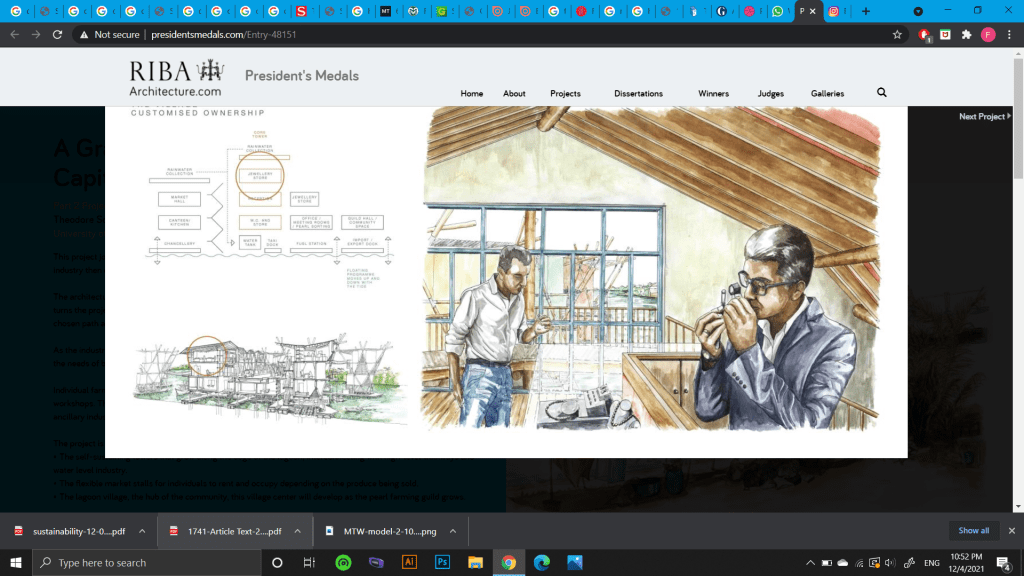
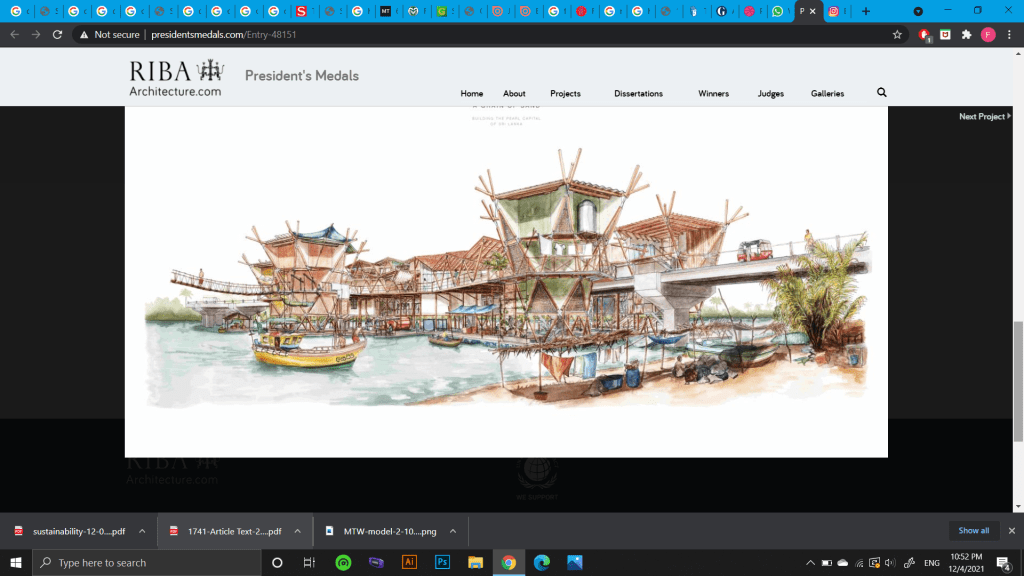
This was a great study material as we can see how much it can impact the community. The structures built reflect their livelihoods nd surroundings.
This project journeys through the city of Chilaw and proposes the reintroduction of a lost industry, pearl farming. This industry then drives the emergence of a new village, creating not only employment, but also community livelihoods.
The architecture reflects the local aesthetic and draws upon existing self-build techniques. This self-build element turns the project into a framework system that can be occupied by the new community depending on each individual chosen path and livelihood.
As the industry grows, so will the village. The project infrastructure allows for this continual development, adapting to the needs of both the community and the individual.
Individual farming towers create the need for a centralised market hall. Increased markets feed the pearl-craft workshops. This in turn requires further workforce housing. The increased community leads to schools, shops and ancillary industries…
The project is divided into three main areas:
• The self-sustaining towers that grow along the edge of the lagoon, interconnecting with high-level walkways and water level industry.
• The flexible market stalls for individuals to rent and occupy depending on the produce being sold.
• The lagoon village, the hub of the community, this village center will develop as the pearl farming guild grows.

 ARC 60708 ADVANCED INTERIOR ARCHITECTURE DESIGN I