NARRATIVE PROGRAMMING IDEAS/SITE IDEAS
PULAU KETAM (CRAB VILAGE)
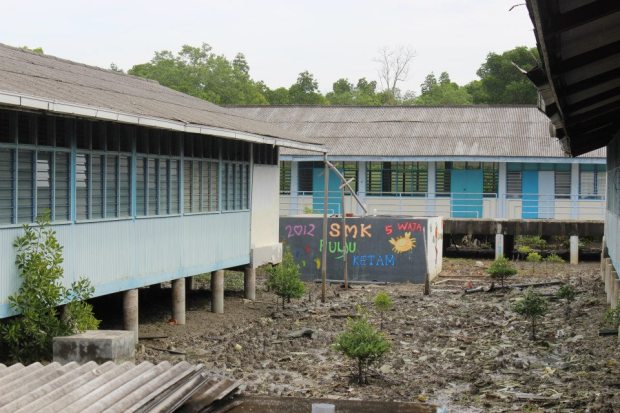
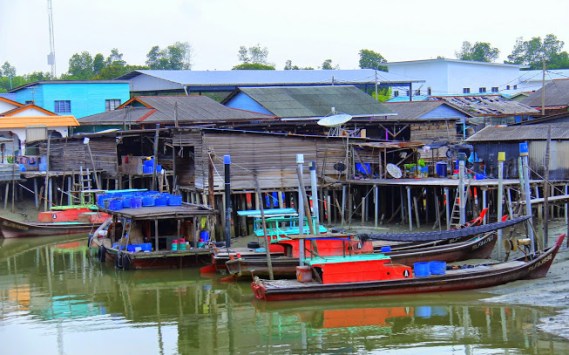
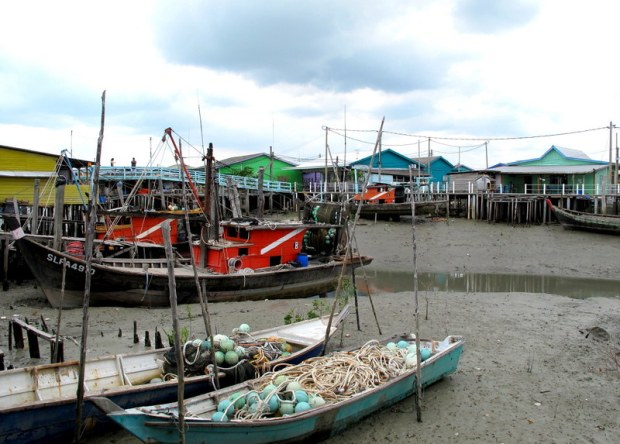
Pulau Ketam, literally translated, means “crab island”. It is a small island located off the coast of Klang. The island is easily accessible from the Port Klang jetty by ferry. The “floating houses” that come to view as visitors approach the island is a sight to awe any city slickers. Perching casually on long wooden stilts, these dwellings are suspended about one to ten (1-10) metre above sea level.The streets, while appearing like normal paved roads, are similarly supported. Outside the main town, more precarious looking wooden bridges can be found. There are no cars on the island and getting around by bike is the norm, though there are a few motorbikes.
-The formerly bustling village was once one of the main suppliers of dried shrimp and ‘belacan’ in the country. Now, however, production is shrinking as many villagers have migrated to the cities and the population is dwindling every year.
-The industry is also facing a succession crisis as the youths prefer to work in urban areas rather than remain in the village. Thus, seafood production and fishing-related crafts are not being passed on to the next generation. The lifestyle and culture, including food consumption patterns and living spaces, have also been significantly affected.
SPECIALTY FOODS
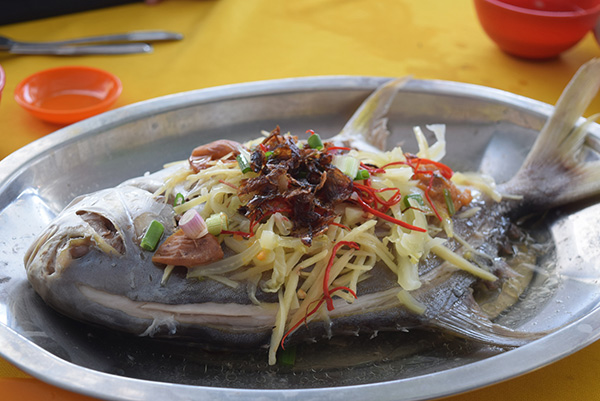
THe main types of seafood found are different types of shellfish(crab, prawns, oysters) and river fish such as barramundi or kempung.
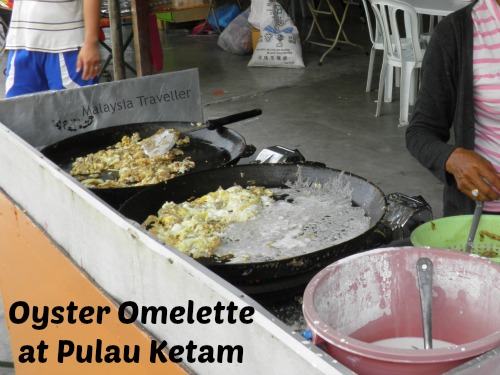
OLYMPUS DIGITAL CAMERA 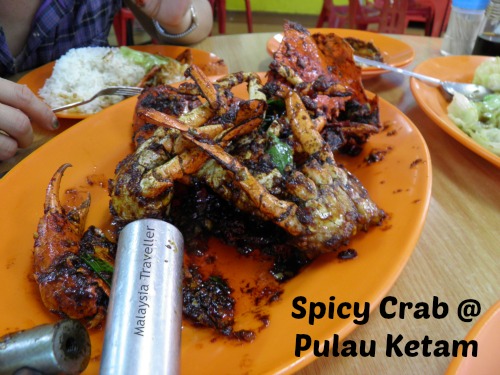
OLYMPUS DIGITAL CAMERA
ISSUES FACED BY THE FISHING COMMUNITY
Pollution is a major issue faced in this village especially with the tide level changes. From the other vessels/boats in the straits of Melaka as well as the community itself, most of the trash is accumulated near the fishing or fish farming areas.
Like many other coastal communities around the world, Pulau Ketam faces the problem where tonnes of rubbish are brought in by the daily tide, affecting their livelihood, sanitary health and homes
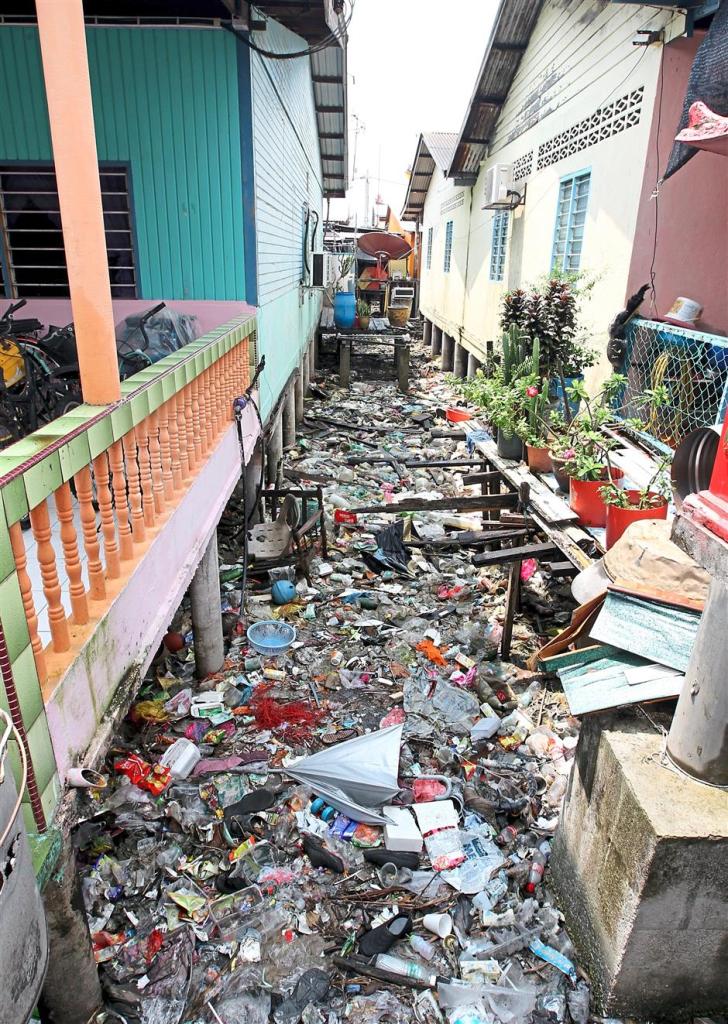
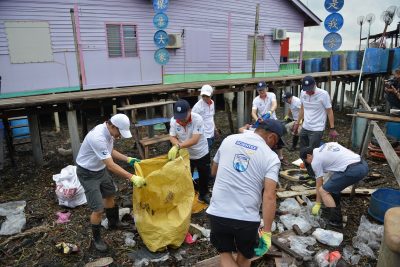
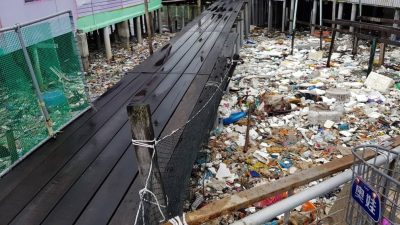
This village is on top of mangroves and mudflats. Mangroves can act as a natural filter as well to an extent but the amount of litter increasing destroys the plants and animals instead.
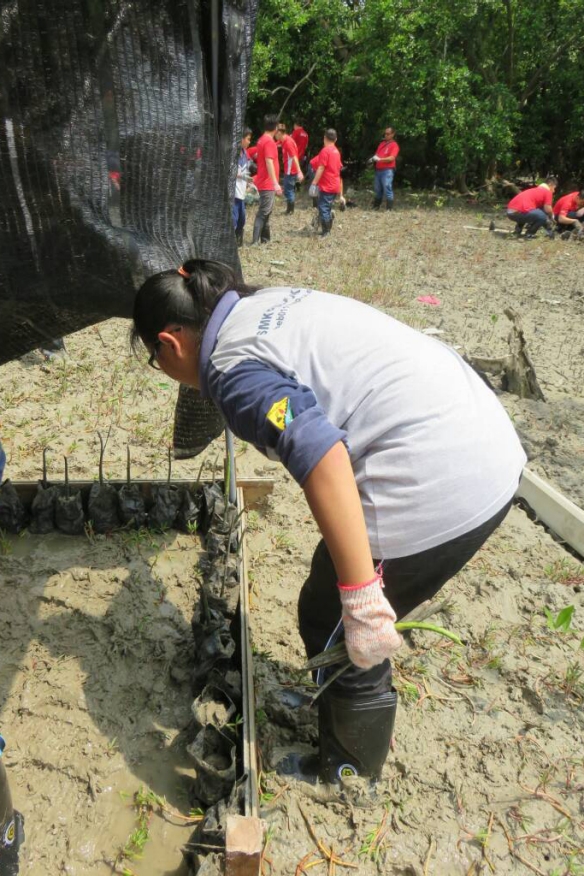
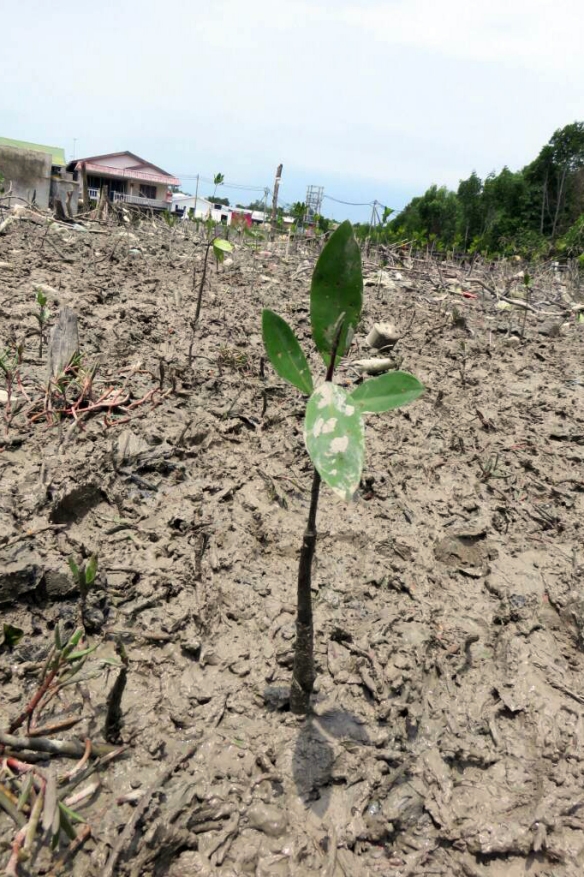
Research on fishes in the area also revealed a scarcity of fish in general – uncommon in mangrove surroundings – and small fishes like baby siakap or kembung.
Besides the lack of buffer zones for fishing activities, which help promote sustainable fishing, the existence of garbage also means trash gets caught in fishing nets. Right now there is one waste management center in the village but even then there are issues of mishandling garbage.
A recent survey by MNS also showed that the island’s environmental health has deteriorated. There is a lack of juvenile commercial fish inside the mangrove areas and fewer bird sightings. Being a mangrove area, there are usually a lot of shore birds around, especially on mudflats. But you don’t see many birds these days and it’s linked to the lack of fishes that the birds can feed on during low tide. While they were planting the mangrove saplings behind the school in this village, they found layers of plastic stuck underneath the mudflats. That prevents the shrimps and cockles from surviving there.
PROGRAMMING/ACTIVITIES
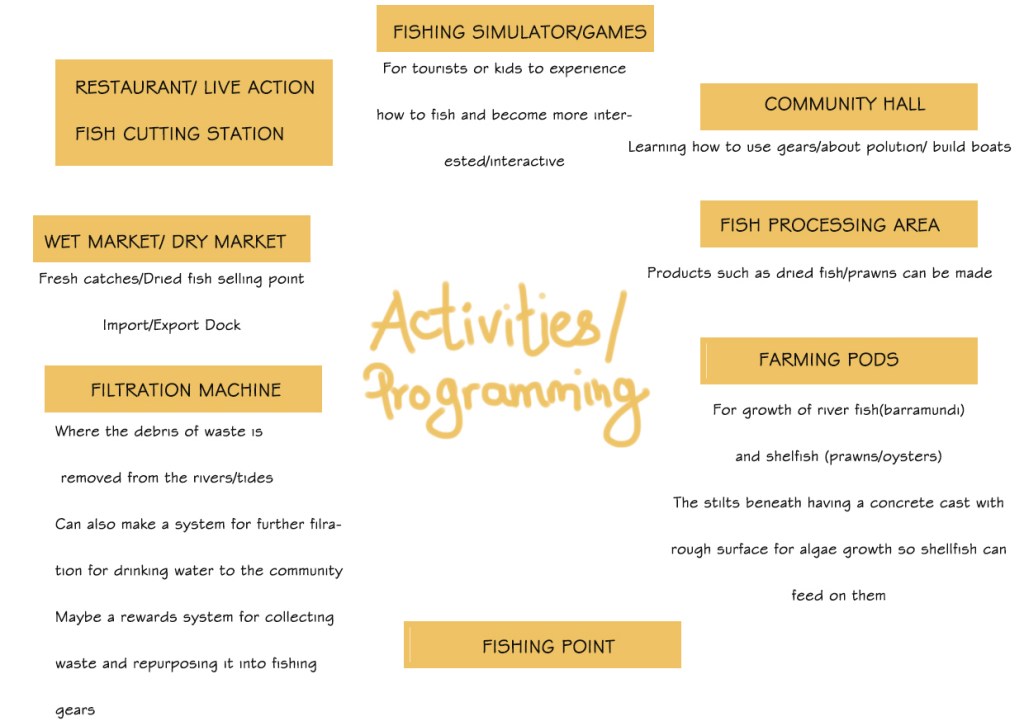
As of now, these are my main ideas for the activities inside the space. It is not finalized yet but I wanted to make a community center to help the small fishing community
IDEAS AND MEDIUM
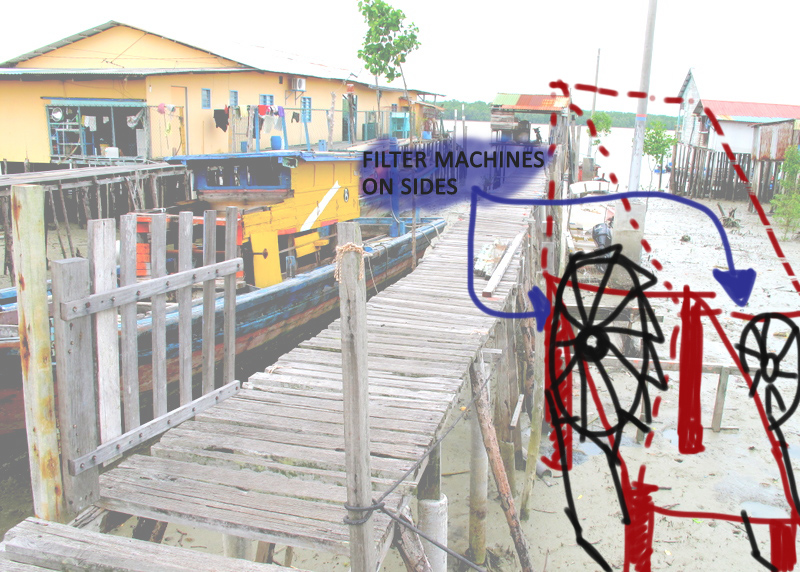
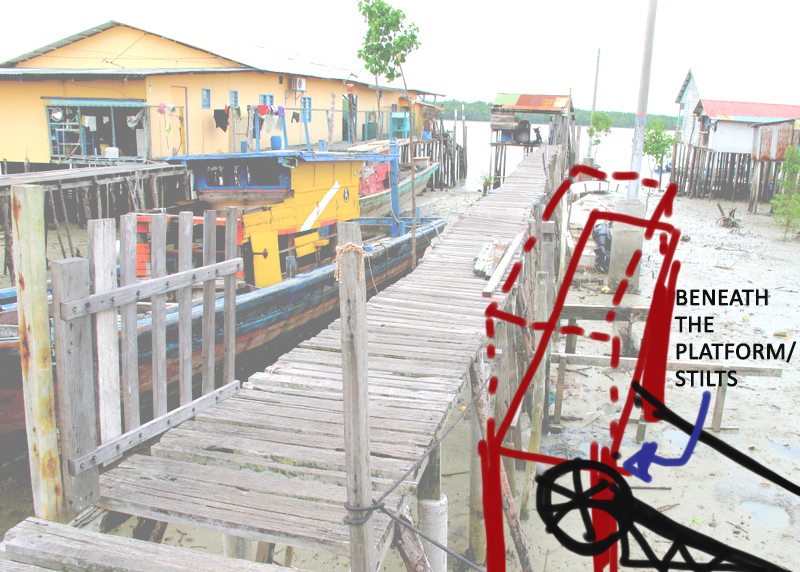
As per my previous weeks blogpost, I have decided to think about how to place the filter medium on the actual site. With the mechanism for removing the debris, I could place it towards the bottom of the stilts or as a part of the area as well in this way. Perhaps this place can be a floating one as well with the filter system attached throughout the structure.

 ARC 60708 ADVANCED INTERIOR ARCHITECTURE DESIGN I